
Hair Tips
How to Get Rid of Frizzy Hair: Causes, Solutions and the Best MONAT Products
Hair With MONAT · Updated September 2, 2026 · 10 min read
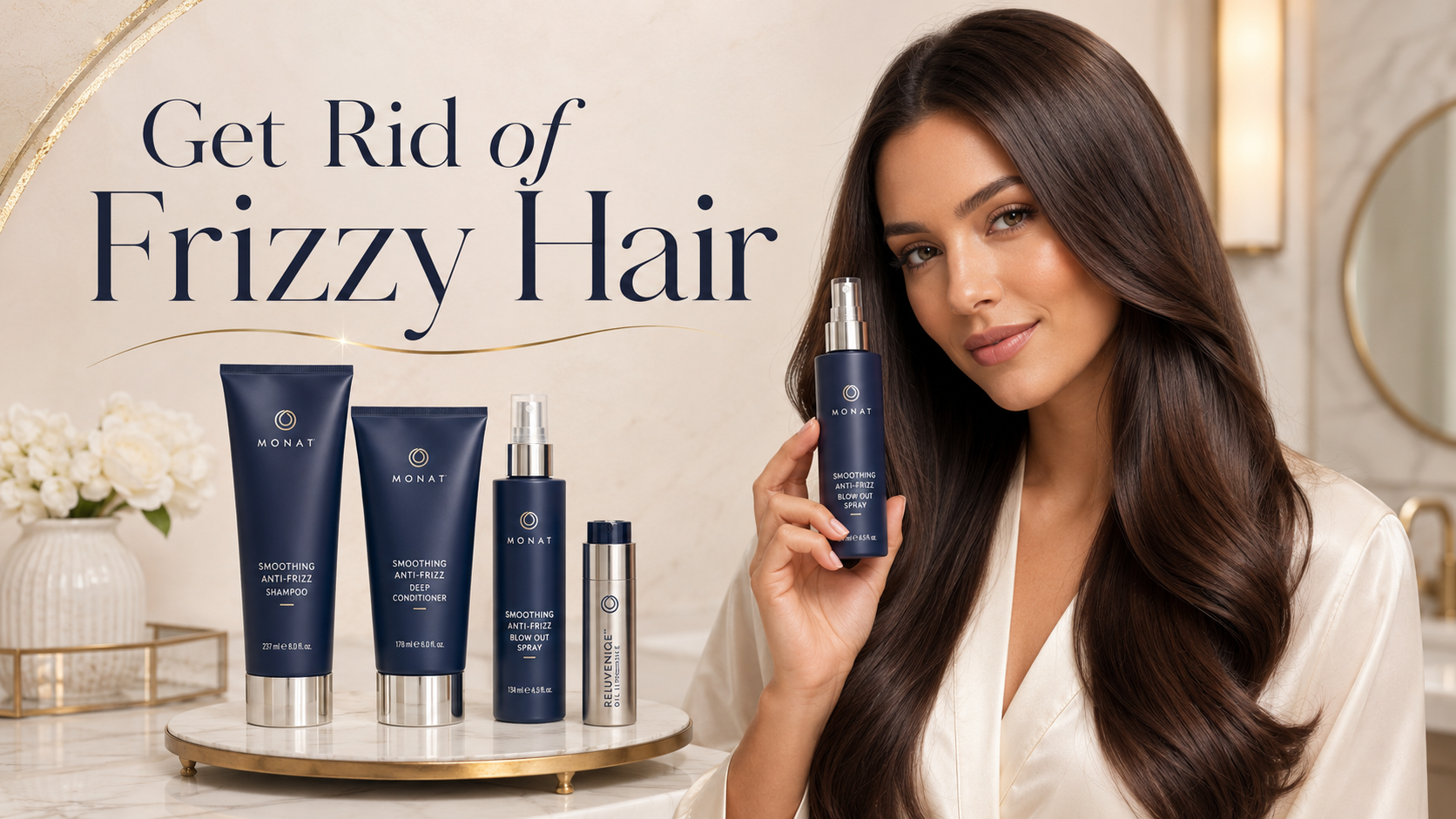
Frizzy hair can appear almost overnight. One humid afternoon, a little too much heat styling, or a few days of dry weather can turn smooth hair into flyaways, rough ends and unwanted volume.
But frizz is not simply unruly hair. It is often a sign that your hair needs a better balance of moisture, conditioning and protection.
Whether your hair is straight, wavy, curly or coily, understanding what causes frizz is the first step toward getting smoother, softer and more manageable hair. Here is how to build an effective anti-frizz routine and where MONAT products can fit into it.
Why does hair get frizzy?
Frizz happens when individual strands no longer lie smoothly together. Humidity is one of the most common triggers. When hair interacts with moisture in the air, especially hair that is dry, porous or damaged, strands can swell and lose their smooth appearance.
But humidity is only part of the story. Hair that has been damaged or excessively dried can also become more prone to roughness, splitting, breakage and frizz.
- Dry or dehydrated hair
- Humidity
- Heat styling
- Chemical processing or hair color
- Rough towel drying
- Overwashing or overly harsh cleansers
- Lack of conditioning
- Split or damaged ends
- Friction while sleeping
- Brushing curls or waves when dry
- Sun and environmental exposure
1. Start with an anti-frizz shampoo
Your anti-frizz routine begins before you ever reach for a styling product. A shampoo designed specifically for frizz can cleanse the scalp and hair without leaving strands feeling excessively stripped.
MONAT Smoothing Anti-Frizz Shampoo is formulated to gently cleanse while helping hair look smoother, softer and more manageable. MONAT positions the formula specifically for reducing frizz, static and flyaways while helping protect against humidity.
Apply shampoo primarily to your scalp rather than aggressively scrubbing the entire length of your hair, then allow the lather to move through your ends while rinsing. This can help clean your hair while minimizing unnecessary friction.
2. Never skip conditioner if your hair is frizzy
If shampoo cleanses, conditioner is what helps restore softness and manageability. This becomes particularly important for dry, coarse, processed or naturally textured hair.
MONAT Smoothing Anti-Frizz Deep Conditioner is formulated with REJUVENIQE and designed to help protect against humidity while improving smoothness, softness and manageability.
Concentrate conditioner from the mid-lengths through the ends, which are typically the oldest and driest portions of your hair. If you have fine hair, keep heavy conditioner away from the roots.
3. Give very dry or thick hair extra conditioning
Some hair needs more than regular conditioner. If your hair is very dry, thick, coarse, curly, coily, chemically processed or frequently heat styled, consider incorporating a deeper conditioning treatment.
MONAT Smoothing Anti-Frizz Deep Intensive Treatment is designed specifically for medium-to-thick hair, including curls and coils, and is formulated to improve smoothness while reducing frizz, static and flyaways. A deeper conditioning treatment is especially helpful when your ends feel rough even after regular conditioning.
4. Stop rough-drying your hair with a towel
This is one of the easiest changes you can make. Traditional bath towels combined with vigorous rubbing create friction, and your hair is more vulnerable when wet.
- Gently squeeze excess water from your hair.
- Blot or wrap your hair with a microfiber towel or soft cotton t-shirt.
- Avoid rubbing your hair back and forth.
5. Apply styling products while hair is still damp
Do not wait until your hair has completely dried and become frizzy before trying to smooth it. Apply your leave-in and styling products while your hair is still damp.
For people who regularly blow-dry, MONAT Smoothing Anti-Frizz Blow Out Spray is designed as a smoothing styling product that also provides thermal protection. According to MONAT, it provides heat protection up to 450F while helping minimize frizz and split ends during styling.
Even with a heat-protecting product, use the lowest effective temperature on your styling tools whenever possible. More heat is not necessarily better.
6. Finish with a small amount of hair oil
Hair oil can be one of the simplest ways to transform rough-looking ends. A few drops can help smooth the appearance of flyaways while adding shine.
MONAT REJUVENIQE Oil Intensive is a multipurpose hair and skin oil made with a proprietary blend of more than 13 plant and essential oils, positioned for improving shine, reducing frizz and conditioning the hair.
The key is quantity. Start with one or two drops, warm the oil between your palms and lightly smooth it through the mid-lengths and ends. Fine hair generally needs much less product than thick or coarse hair. You can always add more, but removing too much oil is considerably harder.
7. Protect your hair from heat
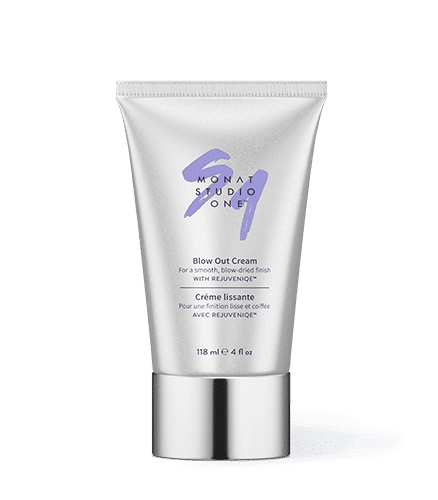
Flat irons, curling irons and blow dryers can create beautiful styles, but frequent high-temperature styling can also contribute to dryness and damage. For blowouts, MONAT Studio One Blow Out Cream is another option formulated to smooth hair during heat styling and reduce frizz and flyaways.
- Reduce the temperature of your styling tools.
- Avoid repeatedly passing a flat iron over the same section.
- Use thermal protection every time.
- Allow hair to partially air-dry before blow-drying when practical.
- Give your hair occasional heat-free days.
8. Do not overwash dry hair
There is no single answer to how often you should wash your hair. Your ideal schedule depends on your scalp, hair texture, activity level, styling products and how quickly your hair becomes oily.
Someone with an oily scalp may need to shampoo more frequently than someone with thick, dry or curly hair. If your lengths and ends constantly feel dry but your scalp needs washing, concentrate shampoo at the scalp and conditioner on your lengths. Understanding your individual wash schedule can make a noticeable difference in how manageable your hair feels.
9. Protect your hair while you sleep
Eight hours of friction against cotton bedding can contribute to tangles and flyaways. Avoid sleeping with soaking-wet hair whenever possible, because wet hair is more fragile and experiences additional friction as you move during the night.
- A silk or satin pillowcase
- A loose braid for long hair
- A soft scrunchie instead of a tight elastic
- A satin or silk bonnet for curls and coils
What is the best MONAT routine for frizzy hair?
- 01Cleanse with MONAT Smoothing Anti-Frizz Shampoo, gently cleansing the scalp and hair.
- 02Condition with MONAT Smoothing Anti-Frizz Deep Conditioner, focusing on the mid-lengths and ends.
- 03Deep condition when needed with MONAT Smoothing Anti-Frizz Deep Intensive Treatment, particularly useful for medium-to-thick, curly, coily or very dry hair.
- 04Protect before heat with MONAT Smoothing Anti-Frizz Blow Out Spray, applied according to the product directions.
- 05Finish with a small amount of MONAT REJUVENIQE Oil Intensive through the ends for extra conditioning and shine.
Frizz vs dry hair: what is the difference?
Dry hair and frizzy hair often occur together, but they are not the same thing. Dry hair refers primarily to a lack of moisture and conditioning. Frizz describes the visual effect of strands separating, lifting or expanding rather than lying smoothly together.
If your hair feels rough, brittle and dull in addition to appearing frizzy, moisture and conditioning should be major parts of your routine. If your hair feels relatively healthy but suddenly becomes frizzy in humid weather, humidity protection and styling products may matter more.
What about curly or wavy hair?
Frizz does not mean curls are unhealthy. Natural waves, curls and coils have texture and volume, and trying to eliminate every individual flyaway can remove the character of naturally textured hair. Focus instead on definition, hydration and manageability.
MONAT also offers Curl Perfection Curl-Defining Cream, a leave-in styler designed for wavy, curly and coily hair that provides moisture, curl definition and frizz control. The goal is not to make curly hair straight. It is to help curls look defined, conditioned and intentional.
The bottom line
You do not have to fight frizz with ten different products every morning. Cleanse gently, condition consistently, handle wet hair carefully, protect hair from heat, use products appropriate for your hair type and add a small amount of oil when your ends need extra conditioning and shine.
Most importantly, give your routine time to work. Healthy-looking, manageable hair comes from what you do consistently, not what you do once.
Porosity, humidity and why the same product behaves differently on two people
Porosity describes how readily your hair takes water in and lets it out again. Highly porous hair, usually the result of colouring, bleaching, repeated heat styling or simply years of wear at the ends, absorbs humidity quickly and swells unevenly, which is exactly what frizz looks like. Low porosity hair resists water, so it frizzes less in humid air but takes longer to feel properly conditioned and holds on to product residue that makes it look dull rather than smooth.
This is why two people can use the same anti-frizz shampoo and report opposite results. If your hair is porous, the priority is conditioning and sealing, which means the deep conditioner and a finishing oil matter more than the shampoo. If your hair is low porosity, the priority is a genuinely clean starting point and lighter layers, so you get more from careful cleansing and a small amount of leave-in than from heavy treatments.
A simple way to work out which camp you are in is to notice how your hair behaves an hour after washing without any product. Porous hair dries fast, feels rough at the ends and expands. Low porosity hair stays damp longer and feels slippery. Once you know that, choosing between a deep conditioner, a leave-in and a finishing oil stops being guesswork.
Referenced hereSmoothing Deep ConditionerRESTORE Leave-In ConditionerREJUVENIQE® Oil Intensive
The order you layer products matters more than how many you own
Anti-frizz products work in sequence, from the thinnest to the thickest. Water first, then a leave-in conditioner while the hair is still dripping, then a heat protectant if you are drying with a tool, then a styling cream or curl cream, and only at the very end a drop or two of oil on the surface. Reverse any part of that order and the later product cannot reach the hair, which is the most common reason a routine feels heavy and still frizzes by lunchtime.
Apply everything in sections rather than raking it over the top layer. Split the hair in four, work each quarter from the ends upwards, and stop before you reach the roots on anything richer than a leave-in. Frizz almost always begins at the ends, so that is where the product belongs.
One more habit that pays off immediately: stop touching your hair while it dries. Every pass of your hand lifts the surface again. Put the product on, shape the hair once, and leave it alone until it is dry.
Referenced hereRESTORE Leave-In ConditionerStyling Cream & Taming WandFlex Control Hairspray
What a realistic anti-frizz timeline looks like
Smoothness and manageability change the first time you wash and condition properly, because you are altering the surface of the hair. That is a same-day result. What takes longer is the condition of the ends, because the rough, split centimetres that flare in humidity cannot be repaired, only smoothed and eventually cut off. Expect six to twelve weeks of consistent conditioning plus one trim before the frizz halo genuinely shrinks.
Track it honestly. Photograph unstyled, air-dried hair in the same daylight every three weeks rather than judging results after a blow-dry, which flatters everything. If the halo is smaller and the ends look blunter, the routine is working. If nothing has changed after two months, the missing piece is usually either a deep treatment or a haircut, not another styling product.
If your hair is dry as well as frizzy, or damaged from colour and heat, treat those first. Frizz is a symptom that fades once moisture and condition are back in balance.
Referenced hereREPLENISH MasqueRENEW ShampooREJUVABEADS™
Ready to shop?
All purchases are completed on the official MONAT storefront, with current pricing and the satisfaction guarantee.
Frequently asked questions
Why is my hair so frizzy all of a sudden?
Changes in humidity, heat styling, chemical processing, dryness, friction or changes in your haircare routine can all make frizz suddenly appear more noticeable.
How do I stop my hair from getting frizzy after washing?
Use conditioner, avoid aggressive towel drying, gently detangle your hair, apply appropriate leave-in products while your hair is damp and use thermal protection before heat styling.
Does dry hair cause frizz?
Dryness can contribute to frizz because dry or damaged strands often have a rougher surface and can be more vulnerable to environmental moisture and friction.
Is hair oil good for frizzy hair?
Hair oils can help condition hair, add shine and smooth the appearance of dry ends and flyaways. Use a small amount to avoid weighing the hair down.
Should I put hair oil on wet or dry hair?
It depends on the product and your hair type. Some oils can be used on damp hair before styling and in very small amounts on dry hair as a finishing product. Always follow the directions for the individual product.
How often should I use an anti-frizz conditioner?
Many anti-frizz conditioners are designed to be used whenever you shampoo. Deep treatments may be used differently depending on your hair type and the individual product directions.
What MONAT products are good for frizzy hair?
MONAT categorizes several products specifically for frizz, including Smoothing Anti-Frizz Shampoo, Smoothing Anti-Frizz Deep Conditioner, Smoothing Anti-Frizz Deep Intensive Treatment and Smoothing Anti-Frizz Blow Out Spray. REJUVENIQE Oil Intensive can also be incorporated for conditioning, shine and frizz control.
Products mentioned
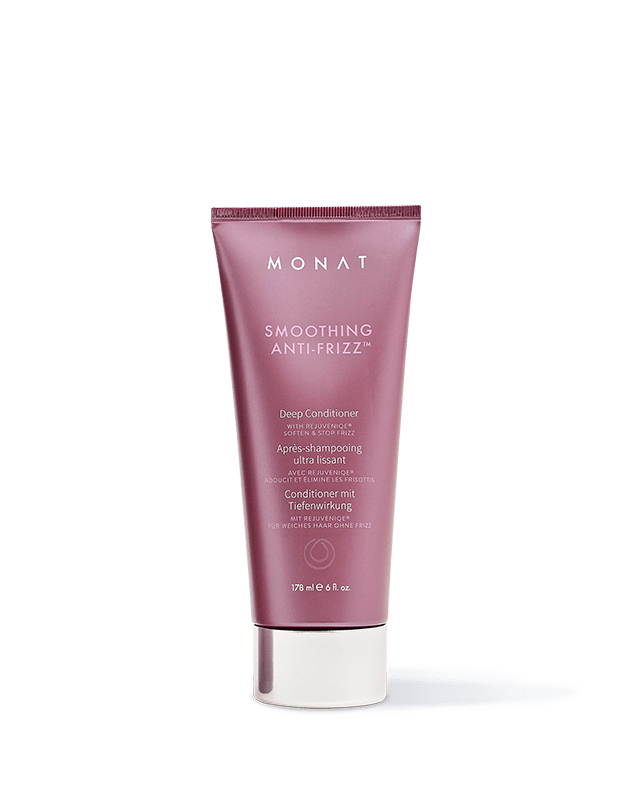
Smoothing Deep Conditioner
A deep conditioner focused on smoothness and frizz control for unruly, humidity-sensitive hair.
$59VIP $49
Best for: Frizzy hair
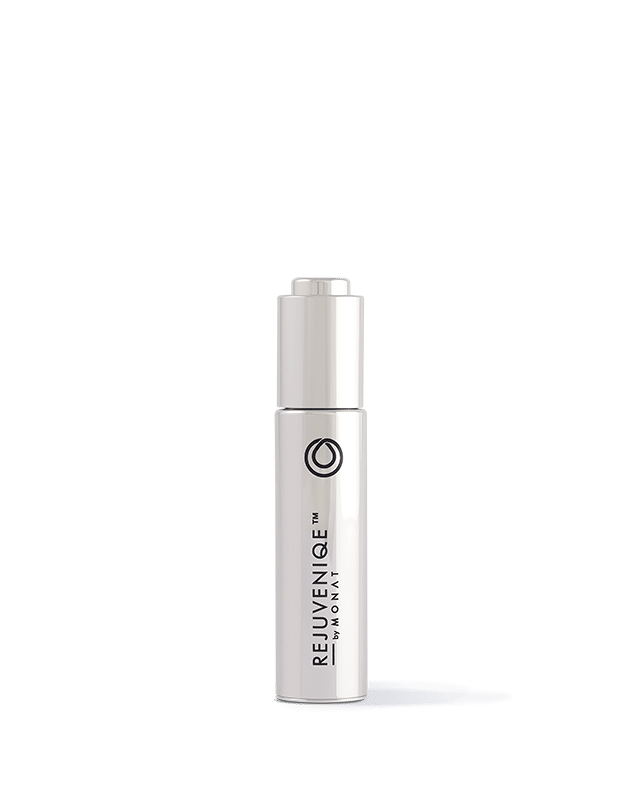
REJUVENIQE®
REJUVENIQE® Oil Intensive
MONAT's signature lightweight oil blend, formulated to add softness, shine and manageability to hair from scalp to ends.
$108VIP $92
Best for: Dry hair
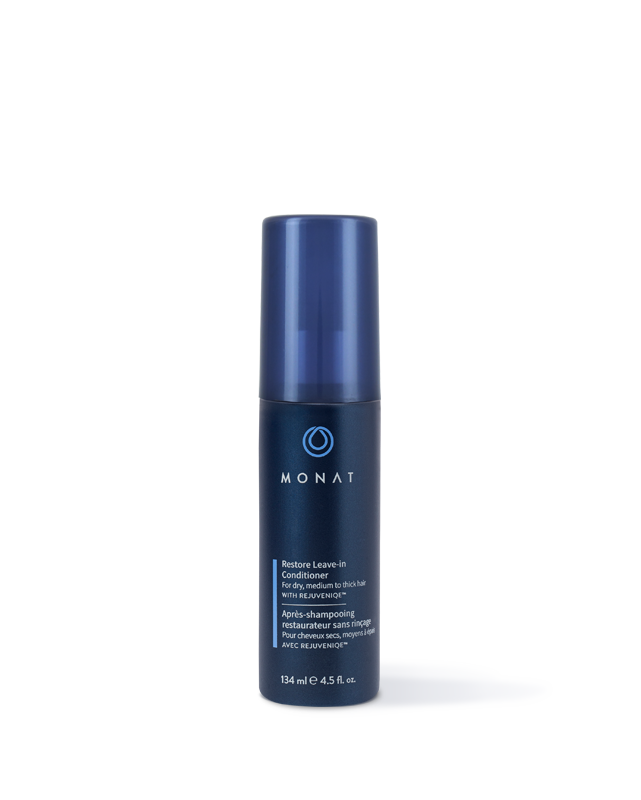
RESTORE Leave-In Conditioner
A lightweight leave-in that detangles, softens and preps hair for styling.
$45VIP $38
Best for: Dry hair
Styling
Styling Cream & Taming Wand
A precision styling cream and wand for taming flyaways and finishing sleek styles.
$31VIP $26
Best for: Flyaways
Keep reading
Hair Tips
How Often Should You Wash Your Hair?
The answer depends on your scalp, not your hair and 'training' your scalp to produce less oil is largely a myth.
Hair Tips
Hair Oil vs Hair Serum: Which Do You Need?
They are not interchangeable. One seals, the other delivers and most people benefit from both.
MONAT Haircare
Best MONAT Shampoo for Dry Hair | Hydration Guide
RENEW is the short answer. The longer answer is that shampoo is only about a third of the job when hair is genuinely dry.