
Thinning Hair
Why Is My Hair Falling Out? Hair Shedding vs. Breakage and What to Do
Hair With MONAT · Updated September 11, 2026 · 11 min read

You wash your hair and notice more strands in the drain. Then there is hair in your brush, on your pillow and wrapped around your fingers when you shampoo. Naturally, the first question is: why is my hair falling out?
It is one of the most common hair questions people search online, but not everything that looks like hair loss is the same problem. Sometimes you are experiencing normal shedding. Sometimes hair is breaking along the strand. And sometimes increased shedding can be connected to stress, hormones, nutrition, illness, medications or a medical form of hair loss.
Understanding the difference matters, because the solution for brittle, damaged hair is very different from the appropriate next step for true hair loss. Here is how to tell what may be happening and where your haircare routine fits in.
Is it normal to lose hair every day?
Yes. Hair naturally moves through a growth cycle. Individual hairs grow, rest and eventually shed so that another growth cycle can begin. The American Academy of Dermatology notes that losing roughly 50 to 100 hairs per day can be normal.
That number can look surprisingly dramatic on wash day, especially if your hair is long or thick, you wear it tied up much of the day, you do not wash every day, or loose hairs stay trapped in curls and waves until washing. Someone washing once every four days may appear to lose far more hair in the shower than someone washing daily, even though the weekly total is similar.
The question is not simply whether you see hair. It is whether the amount has noticeably changed for you.
Hair shedding vs hair breakage: they are not the same
A shed hair comes out from the root as part of the hair-growth cycle. You may see a full-length strand and sometimes a tiny pale bulb at one end.
Breakage happens somewhere along the hair shaft. Instead of losing a complete strand from the root, weakened hair snaps. Common signs include short pieces of hair, uneven ends, frizz around the crown, split ends, hair that feels rough or brittle, length that never seems to increase and hair snapping during brushing.
If you are finding lots of shorter pieces rather than complete strands, damage and breakage may be part of the problem. That matters, because a cosmetic haircare routine can do much more for breakage than it can for a medical cause of hair loss.
Why is my hair shedding more than usual?
There are many possible reasons. A dermatologist may look at your health history, recent stress, nutrition, medications, hormones, family history and scalp condition rather than assuming a single cause.
Significant physical or emotional stress can shift more hairs into the shedding phase, and the increase may not appear immediately after the stressful event, which makes the connection hard to recognise. A major illness, high fever or surgery can also be followed by noticeable shedding.
Hormonal changes influence the hair-growth cycle, with pregnancy and the postpartum period being well-known examples. Hair follicles also need adequate nutrition, and low intake of nutrients such as protein or iron can be associated with shedding. That does not mean enormous doses of hair supplements will fix thinning; if you suspect a deficiency, a healthcare professional can advise whether testing is appropriate.
Large changes in calorie intake or rapid weight loss can affect shedding too, and some medications contribute. Never stop a prescribed medication because of a hair concern without first speaking with the prescribing clinician.
Can damaged hair look like hair loss?
Absolutely, and this is where many people become confused. Imagine your follicles are producing hair normally, but the hair keeps snapping several inches from the scalp. Your ponytail becomes thinner, your ends look sparse and your hair seems to stop getting longer. Visually that can look like hair loss, even though the problem is happening along the hair shaft.
- Bleaching, frequent colouring and chemical processing
- Flat irons, curling irons and excessively hot blow drying
- Rough detangling and repeated friction
- Tight hairstyles and extensions
- Dry, brittle hair with no conditioning support
How can I tell whether my hair is breaking?
Look closely at what is coming out. Many short pieces, uneven lengths and visibly frayed ends suggest breakage. Then look at the hair itself: white dots along the ends, split ends, a rough texture, short flyaways where heat is applied, or ends significantly thinner than the roots all point toward structural damage.
For chemically or heat-stressed hair, a BOND IQ routine is more relevant than a scalp-thinning product, because the goal is improving the appearance, strength and manageability of damaged lengths.
What if my hair is thinning at the roots?
That is a different situation. You may notice a wider-looking part, more visible scalp, less density at the crown, a smaller ponytail circumference or reduced fullness near the roots.
For cosmetic care of thinning-looking hair, MONAT's IR CLINICAL system is the relevant product family: a scalp-focused cosmetic routine of treatment shampoo, conditioner and a leave-on scalp serum. The distinction matters. IR CLINICAL is cosmetic haircare. It is not a medical treatment for alopecia or another diagnosed hair-loss condition.
Can shampoo cause hair loss?
Usually, seeing hair during shampooing does not mean the shampoo caused those hairs to fall out. Hairs already in the shedding phase simply become visible when you massage, rinse and detangle.
That said, a product that significantly irritates your scalp should not be ignored. If you develop burning, persistent redness, swelling, severe itching, a rash or painful scalp symptoms, stop using the suspected product and seek medical advice if symptoms persist. The goal of shampoo is to cleanse the scalp appropriately, not to avoid washing because shed hairs in the shower are alarming.
Does washing your hair too often cause hair loss?
Normal washing does not pull healthy follicles out of your scalp. What matters more is how you wash and what your individual scalp needs. Fine, oily hair may require more frequent cleansing, while dry, curly or coily hair may tolerate longer intervals. The important point is not to force your scalp onto somebody else's schedule.
Can tight hairstyles make hair thinner?
Repeated tension matters. Very tight ponytails, braids, extensions and similar styles continually pull on the hair. If a hairstyle hurts, creates tension around the hairline or repeatedly pulls the same area, loosen it. Alternate hairstyles and give vulnerable areas a break. Hair should not have to hurt to look polished.
What haircare can actually do
Haircare is enormously useful when expectations are realistic. Good products and technique can reduce breakage, improve softness and manageability, reduce tangling, protect damaged lengths, improve the appearance of fullness, keep the scalp clean, improve shine and reduce frizz.
What cosmetic haircare cannot do is diagnose why you are losing hair or cure a medical form of alopecia. That distinction is what makes advice trustworthy.
A MONAT routine based on what you are seeing
There is no single routine for every person worried about hair loss. Choose according to the actual problem.
If your hair looks thinner at the scalp, consider the IR CLINICAL system as a cosmetic scalp-focused routine: use the shampoo as directed, keep heavier conditioner mainly on the lengths, and apply the scalp serum according to product directions.
If your hair is breaking, focus on BOND IQ and damage control: reduce heat, use conditioning treatments and handle wet hair gently. If your hair is very dry and brittle, a hydration-focused routine built around RENEW, REPLENISH Masque, RESTORE Leave-In Conditioner and REJUVENIQE Oil Intensive makes more sense. If your scalp is oily or congested, focus on appropriate cleansing rather than loading the scalp with additional oil.
Hair habits that can help reduce breakage
Sometimes the highest-impact changes cost nothing. These habits will not treat medical hair loss, but they can substantially improve length retention, which makes hair look fuller and healthier.
- 01Lower your heat-tool temperatures.
- 02Use heat protection before styling.
- 03Detangle from the ends upward.
- 04Avoid aggressive brushing when hair is soaking wet.
- 05Use softer hair ties.
- 06Avoid constant tension around the hairline.
- 07Condition your ends consistently.
- 08Sleep with long hair loosely protected rather than tightly tied.
- 09Reduce unnecessary overlapping bleach or chemical processing.
- 010Trim severely split ends before the splits travel farther upward.
When should you see a dermatologist?
Do not rely solely on hair products if something has changed dramatically. Getting the correct diagnosis early is often more useful than buying five different shampoos and hoping one solves the problem.
- Sudden or severe shedding, or bald patches
- A rapidly widening part
- Significant scalp pain, redness or inflammation
- Persistent scaling
- Hair loss affecting eyebrows or eyelashes, or scarring
- Hair loss following a new medication
- Persistent thinning with no obvious explanation
The bottom line
If you are asking why your hair is falling out, first work out whether what you are seeing is likely shedding, breakage or true thinning. Those are not the same problem.
Haircare can protect fragile lengths, reduce breakage, improve the scalp environment and make hair look fuller and healthier. But sudden or significant hair loss deserves medical attention rather than a stronger shampoo.
For thinning-looking hair without a diagnosed medical condition, explore the IR CLINICAL routine. For hair snapping from heat, bleach or chemical processing, start with BOND IQ and a damage-reduction routine. And if you are unsure which category your hair falls into, begin with the evidence you can actually see: where the hair is coming from, whether strands are breaking and whether the change is new.
Ready to shop?
All purchases are completed on the official MONAT storefront, with current pricing and the satisfaction guarantee.
Frequently asked questions
Why is my hair suddenly falling out?
Sudden increased shedding can have many possible causes, including stress, illness, hormonal changes, nutritional issues, medications and hair-loss conditions. Significant unexplained shedding should be evaluated by a healthcare professional.
How much hair loss is normal?
The American Academy of Dermatology notes that shedding approximately 50 to 100 hairs per day can be normal.
How do I know if I have hair loss or breakage?
Shed hairs usually come away as full-length strands from the root. Breakage produces shorter pieces and is often accompanied by split ends, roughness and uneven lengths.
Can damaged hair cause thinning?
Breakage can make the lengths and ends appear thinner even when the follicles are still producing hair normally.
What MONAT products are best for thinning-looking hair?
MONAT's IR CLINICAL system is the brand's cosmetic scalp-focused range designed around thinning-looking and fuller-looking hair. It should not be represented as a medical hair-loss treatment.
What MONAT products are best for breakage?
For chemically processed or heat-damaged hair, the BOND IQ system is the more relevant MONAT range because it focuses on stressed and damaged hair.
Products mentioned
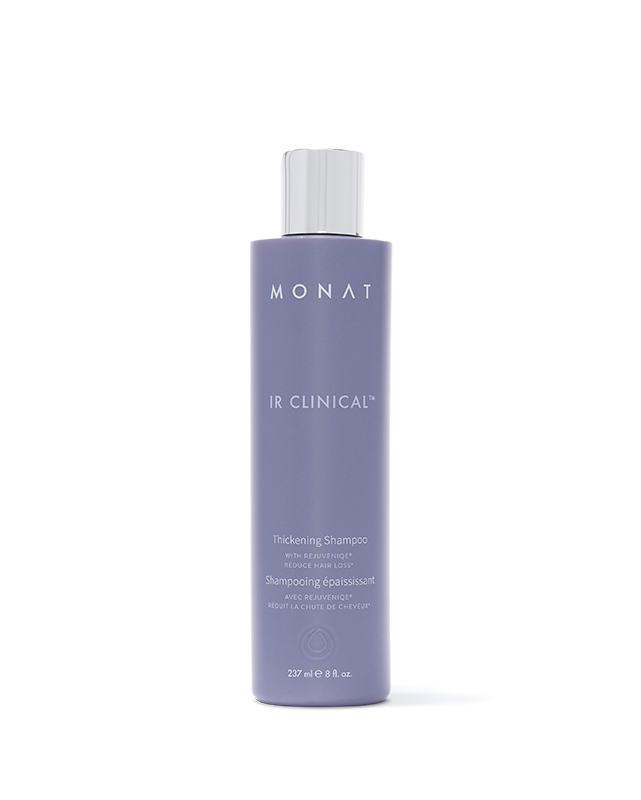
IR CLINICAL™
IR CLINICAL™ Intense Repair Treatment Shampoo
A clinical-inspired cleanse that targets the scalp environment and supports the look of fuller, thicker-looking hair.
$53VIP $44
Best for: Thinning-looking hair
IR CLINICAL™
IR CLINICAL™ Intense Repair Serum
A leave-on scalp serum in the IR CLINICAL system, used daily to support the appearance of fuller hair.
$84VIP $72
Best for: Thinning-looking hair
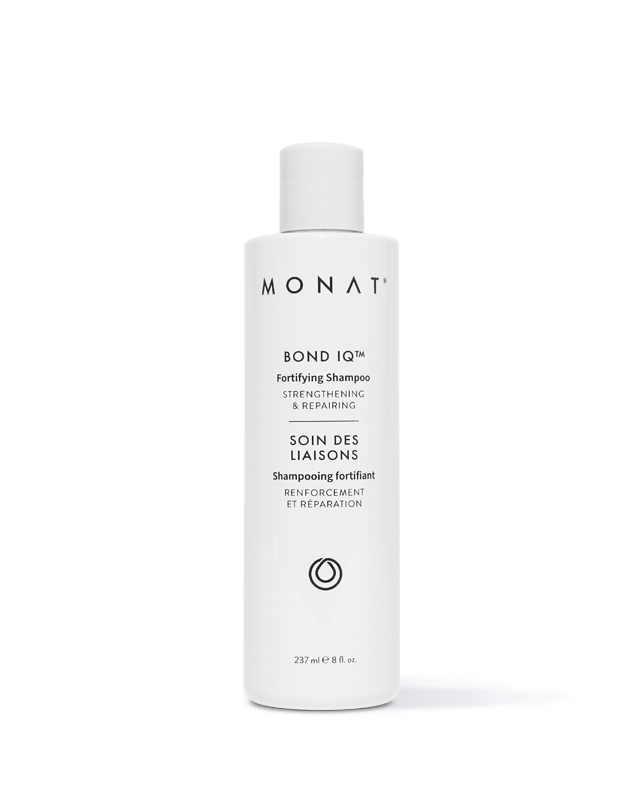
BOND IQ™
MONAT BOND IQ™ Shampoo
A gentle bond-care shampoo that cleanses without stripping, made for hair stressed by color, heat and chemical services.
$50VIP $43
Best for: Damaged hair
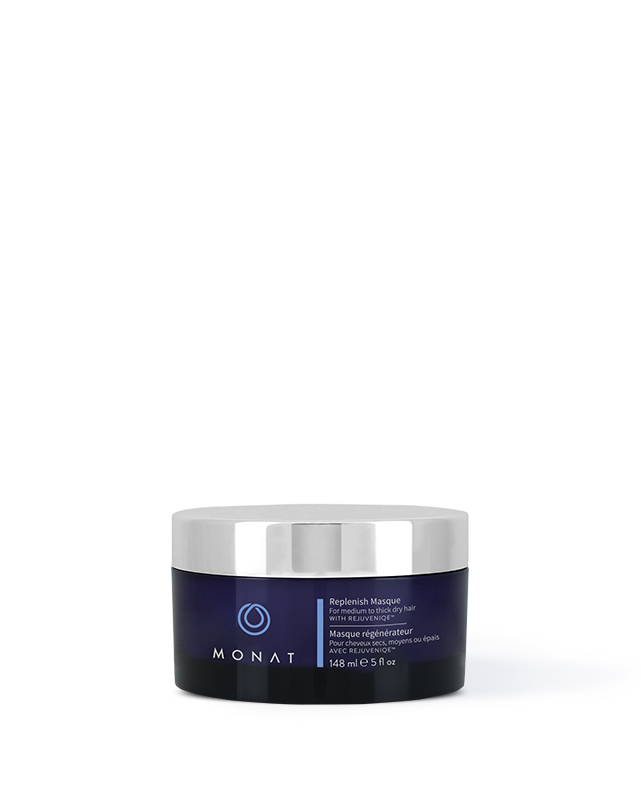
Advanced Hydration
REPLENISH Masque
A rich weekly masque for deep conditioning on dry, damaged-looking or coarse hair.
$66VIP $56
Best for: Very dry hair
Keep reading
Hair Tips
How to Grow Hair Faster: What Actually Works [2026]
How can you grow your hair faster? Learn what actually supports healthy hair growth, how to prevent breakage and which MONAT routines make sense for thinning, damaged or dry hair.
MONAT Product Guides
MONAT IR CLINICAL: What You Need to Know
MONAT's scalp-first system for thinning-looking hair, explained without the hype, including where the claims stop.
Thinning Hair
Best MONAT Products for Thinning Hair (Cosmetic Guide)
The IR CLINICAL system, the volumizing products that support it and an honest explanation of what cosmetic haircare can and cannot do for thinning-looking hair.